

We fly to Switzerland to see the places frequented by the ‘jet set’
We fly to Switzerland to see the places frequented by the ‘jet set’
In 2019, one of the most relevant and most anticipated cultural events of recent years in the Basque Country took place: the reopening of the Chillida-Leku Museum in Hernani. This reopening came to be partly thanks to the boost provided by the Swiss gallery Hauser & Wirth, which would become the only gallery with the ability to sell works from the Chillida inheritance. Meanwhile, the Chillida-Leku Museum would continue along its path, being managed independently by the Eduardo Chillida Foundation and Pilar Belzunce.
But this piece of news was not the only important one related with Hauser & Wirth in 2019, as the gallery announced its intention last May to make Isla del Rey (King’s Island) –an island of Menorca measuring 40,000 m2– a center of art. This piece of cultural news, which was of great international importance, got us interested in the gallery and the country in which the idea was conceptualized: Switzerland. We thus embarked upon a trip around the Alpine country aiming to get to know its cultural offerings and its savoir-vivre.
Zürich
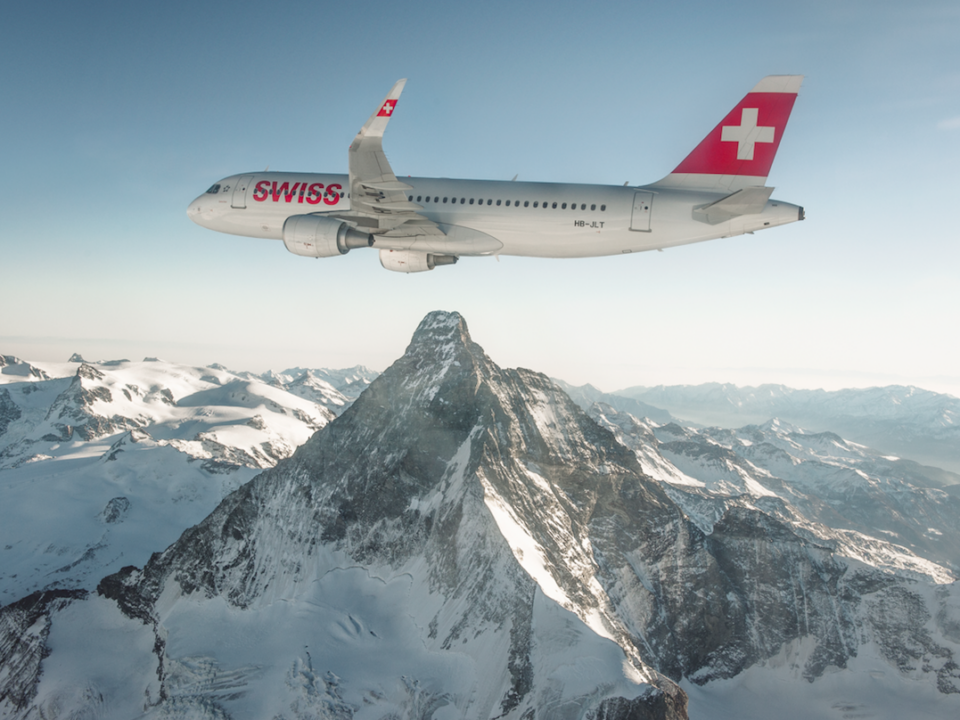
The first stop of our tour was in Zürich, the largest and most important of the Swiss cities. We arrived on board a Bombardier CS100 belonging to Swiss– an airline that offers direct flights between Bilbao and Zurich. BASQUE LUXURY MAGAZINE is included among the range of digital magazines available for the airline’s passengers; thus, we were well entertained while the flight attendants delighted us with champagne and Swiss delicacies.
Upon landing, we stepped inside one of the best terminals in Europe in terms of its luxury boutiques and cuisine – noteworthy is the Center Bar, recognized as one of the best airport bars in the world. Also famous are the Swiss VIP Lounges where, just like on board their aircraft, one can take in the “Swissness” of it all in terms of the food service and selection of local drinks. As it is just ten minutes from the center of Zürich and surrounded by residential areas, the airport is a usual meeting place amongst the locals, who use it as a shopping mall.
Zürich has two very different identities: a very classical one that is quite well known, and another one that is more transgressive, youthful, original, and unknown to many. Our visit to the city started with the second identity; more specifically, it started at the B2 Boutique Hotel where we decided to stay – an old brewery that has been turned into a hotel and spa. Part of the brewery, which dates back to 1867, was turned into Zürich’s first thermal bath in 2011. Its treatments are based on ancient Roman and Irish rituals, which are divided into different areas: a floral steam bath area, an exfoliation area, a massage jet area, a jacuzzi, hot baths, and treatment rooms – among others. A rooftop swimming pool, which is reserved exclusively for hotel guests at the beginning of the day, crowns this unique wellbeing building that, because of its privileged location, offers a panoramic view of the entire city. The hotel was inaugurated in the building’s other wing in 2012, and its heart and soul is a wine bar with a spectacular library consisting of 33,000 titles in different languages.
It is easy to get to the city’s most alternative district, Zürich-West, from the hotel. This industrial area has been transformed in the last few years, with the factories being turned into stores, restaurants, and galleries and becoming one of the trendiest neighborhoods in Europe. Amongst its most recognized symbols are the Freitag Flagship Store –a tower of shipping containers which houses the main store of the local brand that manufactures complements from truck tarps– and Im Viadukt – an arcade under the train tracks that has been turned into a shopping area. Also noteworthy is the Prime Tower, the country’s highest skyscraper. Its bar, Clouds –which is located 120 meters above the ground– is the best option to have a few drinks at sunset. A good restaurant in the area is LaSalle, located in an old shipyard. Not far from there is the Löwenbräu Kunst Contemporary Art Center, a brewery that has been turned into a vibrant cultural space. Amongst its tenants are galleries, a museum, and several exhibition halls. Likewise, it houses the main headquarters of Hauser & Wirth, one of the complex’s promoters and founders. After a guided tour of the gallery’s two exhibition areas, which feature pieces that compete with names as renowned as Louise Bourgeois and Pablo Picasso, we were invited to visit the Baur au Lac Hotel, whose gardens are the site of a temporary Eduardo Chillida exhibition. Among century-old trees, the gallery was able to create a small Chillida-Leku in the heart of Switzerland.
The Baur au Lac Hotel is the clearest sign that we are near the classic area of Zürich: the Bahnhofstrasse, the most luxurious Swiss street, which stretches from the central train station to the lake. Louis Vuitton, Tiffany & Co., Graff, Bucherer, Omega, Chopard, and Cartier are some of the maisons that have decided to be part of this busy shopping avenue.
Crossing the river, one arrives to Niederdorf – a great place for dinner or an afternoon snack (remember that the Swiss start to have dinner at 6:00 p.m.). Very near there, on Napfgasse Street, the city’s best sweets have been prepared since 1842. We’re talking about Conditorei Schober, a pastry shop whose cafeteria is divided over three floors, each with a distinct atmosphere.
Our tour of Zürich finishes at HB, or Hauptbahnhof, the central train station that connects the city with the rest of Switzerland and Europe.
Switzerland


