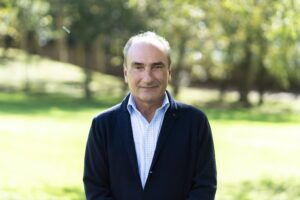
Joxe Mari Aizega: “The popularity of gastronomy will continue to rise, and it is our responsibility to train professionals so that they can develop the sector’s potential, all the while collaborating with companies in innovation and supporting entrepreneurship.”
Joxe Mari Aizega: “The popularity of gastronomy will continue to rise, and it is our responsibility to train professionals so that they can develop the sector’s potential, all the while collaborating with companies in innovation and supporting entrepreneurship.”

BASQUE LUXURY interviews Joxe Mari Aizega, the Director General of the Basque Culinary Center (the Basque Country’s university of gastronomic sciences), to talk about the university’s expansion, with two new projects coming to light: GOe, based in San Sebastián, and EDA, with two new headquarters in Vitoria-Gasteiz and Laguardia.
You have been at the helm of the Basque Culinary Center since its inception, a project that came to be in 2009 in the form of a relatively modest institution that became a leading educational institution in all the world. What are the ingredients of its success?
From the very beginning, the Basque Culinary Center was quite a stimulating project with great potential. The success of the Basque Culinary Center is due to several factors. Firstly, the involvement of the chefs, the commitment of Mondragon University, and the support of institutions and companies in promoting the project since its inception.
The Basque Culinary Center began with an idea and as the answer to a perceived need shared by the most prominent chefs in the Basque Country who were concerned about the future of the gastronomic sector. More than 14 years ago, there were no official university offerings in the culinary field, and haute cuisine felt the need to create a university that would provide training aligned with the demands of the sector, all the while having an innovative and transformative vision.
In addition to the commitment of the chefs, Mondragon University, institutions, and companies, the entrepreneurial spirit of the people who make up the Basque Culinary Center has been key in promoting the constant creation of new initiatives. Other fundamental aspects include a sense of openness to the world and a global vision, making the Basque Culinary Center a welcoming and non-restrictive space. And, of course, ingredients such as effort, a drive for excellence, passion, and dedication have also been essential along the way.
How has the hospitality industry received the Center internationally?
Basque Culinary Center has come to be viewed as a broad ecosystem; a unique ecosystem in which training, innovation, research, and entrepreneurship coexist with the aim of developing and promoting gastronomy. We are excited that, as a result, in each year of the Degree in Gastronomy and Culinary Arts –for example– we have students from more than 30 countries, or the fact that every year we carry out projects in collaboration with more than 50 companies. In that sense, we can say that the culinary sector has welcomed us with open arms. Our relationship with different professionals, our involvement in research projects with different players, the possibility we have of offering internships in almost any restaurant in the world, I think, are all proof to that end.
Gastronomy Open Ecosystem (GOe), a project that aims to integrate science and gastronomy by generating an ecosystem focused on advanced training, research, and innovation, will be inaugurated in San Sebastián at the end of 2025. How do you plan to develop the project’s aims?
Gastronomy Open Ecosystem (GOe) is a project meant to respond to future challenges in gastronomy and food by combining training, science, talent, and technology. In terms of its deployment and development, we are following the same path that was taken with the Basque Culinary Center. New networks and alliances are being formed with companies, chefs, and entities in the food sector. New initiatives and projects are being thought up, planned, and implemented that will help us with our vision – always from the point of view of constant public and private collaboration.
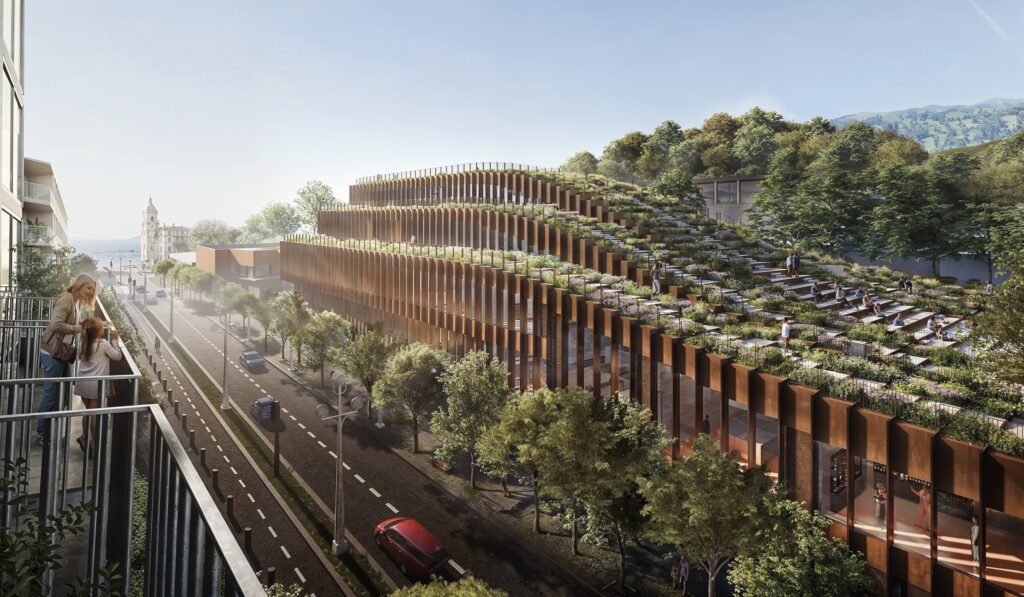
The GOe building is designed by Danish architectural firm Bjarke Ingels Group. What stood out in this project for it to be chosen in the international tender process held to select a leader for the construction work?
Bjarke Ingels is a world-renowned architectural firm and we are delighted that they have designed this building in San Sebastián. I think it fits in exceptionally well with the slopes of the Ulia Mountain, connecting with the Gros District. It is a green building that mixes well with the city’s surroundings and strategy, being full of innovation and open to the public.
The main aspects of the project are its architectural uniqueness, its openness, and its dialog with the city. The building’s integration from a perspective of sustainability and adaptation to the environment is essential, as is the versatility and functionality of the space to host various activities.
What will this new innovation hub bring to the city and its citizens?
I consider San Sebastián to be, on the one hand, a city of gastronomy and, on the other, a city of knowledge, science, and innovation. GOe merges these two areas with the aim of bringing about innovation, promoting new companies, and developing advanced talent in the broad world that is gastronomy and food – all in a collaborative manner.
In addition, GOe creates and offers points of connection for citizens through a number of activities designed to foster dialog and social cohesion in the district and the city. One of its main premises is the creation of public spaces that promote these types of interactions, with roofs being transformed into walkable and landscaped areas and interior spaces open to visitors. These elements not only beautify the environment but they also improve accessibility and quality of life for residents.
In 2026, the Basque Culinary Center will experience a major expansion with the opening of two new locations in Vitoria-Gasteiz and Laguardia. These two locations will be grouped under the name EDA Drinks & Wine Campus. What are the academic objectives of each of these projects?
We understand that the wine and beverage sector is fundamental in terms of economic contribution and employment. Training, research, and innovation will be key for the development of that sector. Our goal is to boost beverage gastronomy as a whole by creating a new university studies program and promoting the research that the sector needs to face challenges such as climate change, new consumer trends, and the development of new recipes. We will be by the sector’s side to provide support through all these challenges.
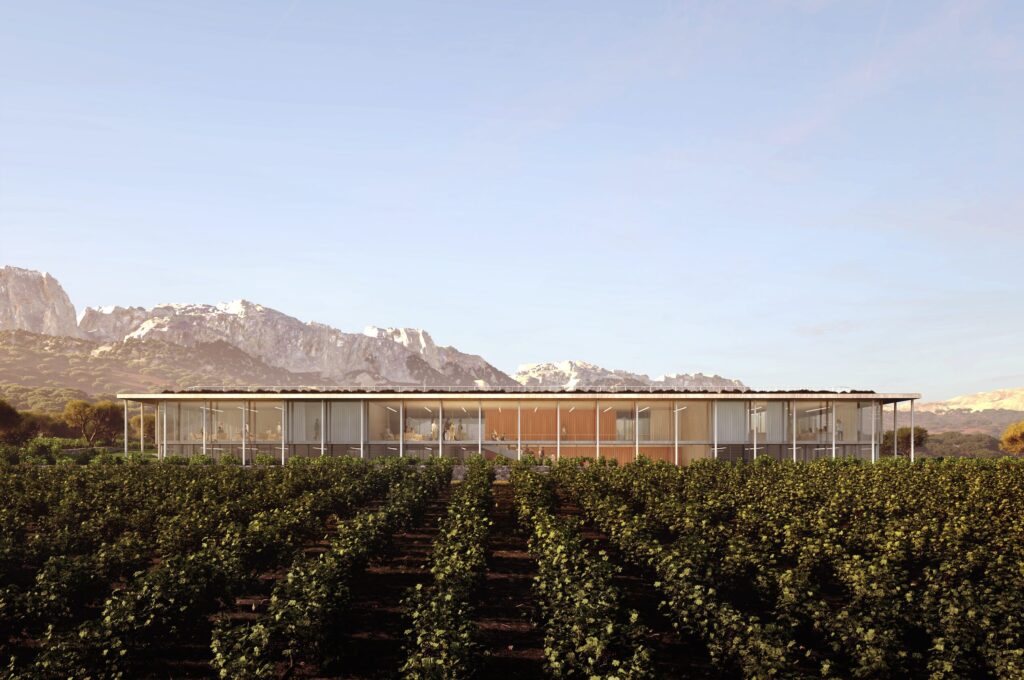
EDA Drinks & Wine Campus will be a pioneering project at an international level, with a very broad and open vision. Thanks to the schools in Vitoria-Gasteiz and Laguardia, the project will contribute to the transformation of the wine and beverage sector, making said sector a world leader in innovation.
What will it mean for the Rioja Alavesa wineries to have a training center specializing in the world of wine?
This center will provide something unique to companies, promoting training, research, and innovation throughout the entire value chain. It will cover everything from ingredients and preparation to product and service design, management, marketing, and business development. And all of this will be under the principles of quality, sustainability, and health – with a global approach that will contribute to economic and social development.
The Portuguese architectural firm Carvalho Araújo will be responsible for constructing the two buildings in Álava. What can you tell us about this studio’s conceptual proposal?
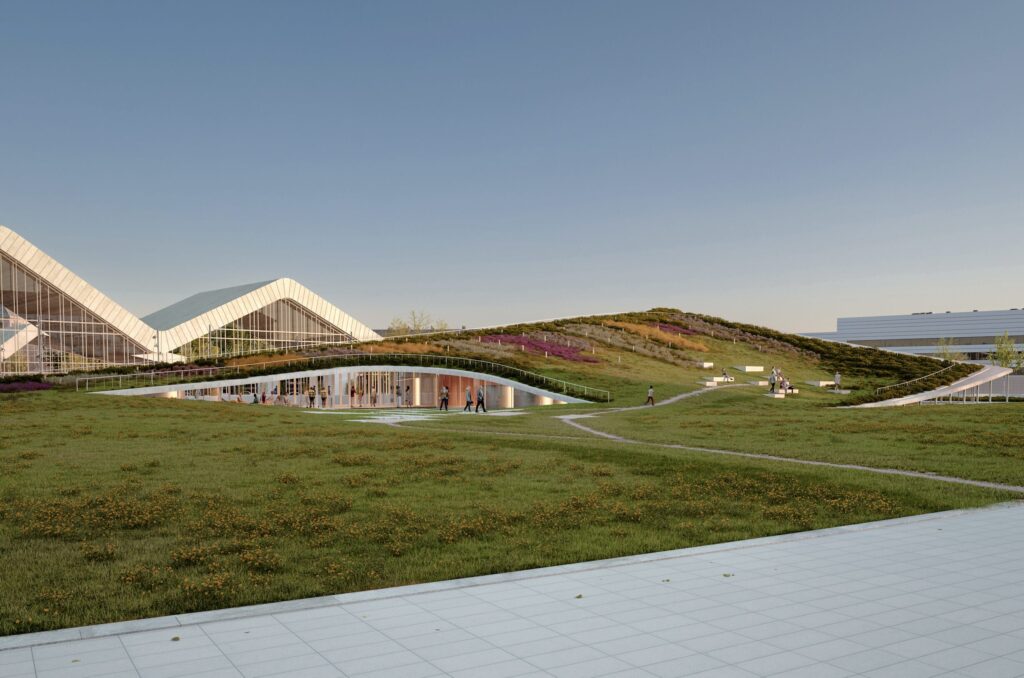
Since our inception, we have always considered buildings to be an essential piece of the puzzle; a metaphor for our projects. They must have an identity and personality that is consistent with their contents. Thus, we held an international architectural tender process, which was won by the Portuguese studio Carvalho Araújo. The project Mugarik Gabe (“Without Borders” in Basque) proposes two very organic buildings that adapt magnificently to their locations. The architectural proposal highlights the organization of our academic endeavors, functionality, and flexibility – all aligned with the project’s needs. The layout of the buildings’ access points and the distribution of the different areas by floors, as well as the connecting spaces, are meant to help unite and organize the different flows, in turn allowing for interactions between the different activities carried out. These are transparent and welcoming spaces, both for students and visitors.
What are the future plans of the Basque Culinary Center?
At the Basque Culinary Center, we understand gastronomy from an all-inclusive perspective as a holistic, multi-purpose, interdisciplinary, and constantly evolving ecosystem in which various profiles and professionals from the sector are involved. The popularity of gastronomy will continue to rise, and it is our responsibility to train professionals so that they can develop the sector’s potential, all the while collaborating with companies in innovation and supporting entrepreneurship.
Our main goal is to advance our founding mission: to develop the economic, social, and cultural potential of gastronomy. Therefore, we will continue to work through the university faculty and new projects like Gastronomy Open Ecosystem (GOe), focused on innovation and the food of the future, and EDA Drinks & Wine Campus, focused on the wine and beverage sector.
We are living in a very special moment and immensely focused on this future development.
Basque Culinary Center has contributed to the professionalism of the catering industry and trades linked to the culinary field. How have you seen the restaurant sector evolve in recent decades?
Over the years we have worked to meet the demands of this diverse sector, updating the training courses on offer through master’s degrees and specialization programs for each of the professions: chefs, sommeliers, maîtres, managers, bartenders, researchers, and specialists in events, tourism, and communication.
The sector has evolved in every sense, especially in terms of managerial expertise. The sector has become more professional, increasing its capabilities and scope. We have faced a number of crises, like COVID-19, the increase of costs due to inflation, and the talent crisis. Nevertheless, the sector continues to evolve and maintain its competitiveness. I think that we must recognize this great evolution and the effort made.
The world in general –and the gastronomy sector in particular– is in constant movement, something which requires us to rely on the professionals who are a part thereof. Contact with the professionals of the gastronomic community allows us to define the future lines of action in order to continue strengthening the sector.
Since its opening in 2009, a great number of students have completed their studies at the Basque Culinary Center. How have these young talents evolved professionally?
Indeed, we have already had nearly 719 students who received degrees between 2011 and 2023, divided over nine graduating classes, with more than 5,000 professionals being trained in that period – not to mention the 1,500 gastronomy enthusiasts who spend time in the kitchens of the Basque Culinary Center every year.
Our different training programs allow for the development of remarkably diverse professional profiles. We have graduates who lead Michelin-starred restaurants, others who have completed their doctoral studies and work in research, entrepreneurs, sommeliers, and many more. This greatly heterogenous group of individuals all have something in common: they are motivated and committed to their professional development and the development of our sector itself.
What position does Basque cuisine have on the world scene?
I think that Basque cuisine is recognized worldwide as one of the great cuisines. This recognition can be seen, for example, in culinary tourism, as we attract visitors from all over the world. It is essential to continue working on the further development and comprehensive support of Basque cuisine so that it keeps this relevance in the future. This is an effort that we must undertake in collaboration with a number of entities, and we are committed to that.
What is luxury to you?
Hmmm, that’s something to think about. For me, luxury is feeling good, positive, and enjoying life. Enjoying a job that I am passionate about, and my personal and family life. And enjoying the authenticity and excellence of gastronomy.