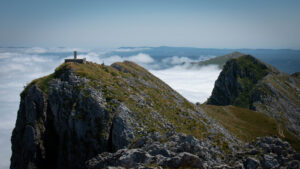
Goierri: we visited the Basque region that charms visitors with its architecture, its historical figures, its traditions, and the richness of its folklore
Goierri: we visited the Basque region that charms visitors with its architecture, its historical figures, its traditions, and the richness of its folklore

Awarded the European Destinations of Excellence Prize (EDEN) in 2015, the Goierri region, also known as the Basque Highlands, offers a wide variety of leisure options, especially for lovers of culture, nature and traditional cuisine. In fact, it is the ideal place for getaways of between three and five days. In municipalities like Beasain, Segura, Ordizia, Ataun, Ormaiztegi, and Zerain, travelers come across cultural landmarks that attest to the historical importance of the Goierri region: the richness of its folklore, its architecture, its historical players, and its traditions.
In Beasain, María de Igartza commissioned, at the beginning of the sixteenth century, the construction of the largest wood palace ever built in the Basque Country on a plot that had formerly been occupied by a medieval house/tower. This place was, after the Middle Ages, one of the most important land routes between Paris and Madrid, and its bridge, built at the beginning of the seventeenth century, acted as link between the two cities for travelers who were crossing the Oria River. In 1611, Isabel de Lobiano built a lodging establishment next to the bridge and the palace. This establishment continues to be used as a hotel today. This spectacular monumental complex called Igartza is rounded off by a hermitage, a dam, a mill, and a forge – all of which can be visited today.
In addition to the aforementioned trade route, Goierri is a place of transit for other mass pilgrimages, such as the Northern Way of Saint James, which becomes a Camino Real (“Royal Road”) as it advances through the region. The San Adrián Tunnel and the Basque Highlands’ mountains make this stage of the journey one of the most spectacular ones. In the year 2015, the Northern Way of Saint James was declared a World Heritage Site by UNESCO, and the San Adrián Tunnel was declared a milestone along the journey.
The King of Castile, Alfonso X (“The Wise”), founded the town of Segura in 1256 with the aim of protecting the paths that led from the plateau to the other side of the Pyrenees. It is worth visiting Segura for its medieval quarter, where some manor houses from that period are still preserved today, such as the Ardixarra Palace (headquarters of the Medieval Interpretation Center), the Lardizábal Palace (currently the Town Hall), and the Asunción Parish Church. One of the most important religious events of the year in Segura is its Holy Week, whose processions date back to the seventeenth century and bring together annually hundreds of devotees, tourists, and lovers of folklore on Holy Thursday and Good Friday.
Ordizia is a medieval town especially known for its market, which celebrated its 500th anniversary in 2012. In 1512, the town suffered a serious fire and Queen Joanna I of Castile granted it the “royal power of being able to hold a weekly tax-free market every Wednesday of the year.” Since that time and continuing today, every Wednesday the local baserritarras from the surrounding areas sell their products, and a guide has been established to set the prices of agricultural products from all over the Basque Country. The old town surrounds the Main Square, where the market is held, and it is full of very interesting historical buildings. The Town Hall, the Zabala Palace, and the Barrena Palace all deserve special mention.
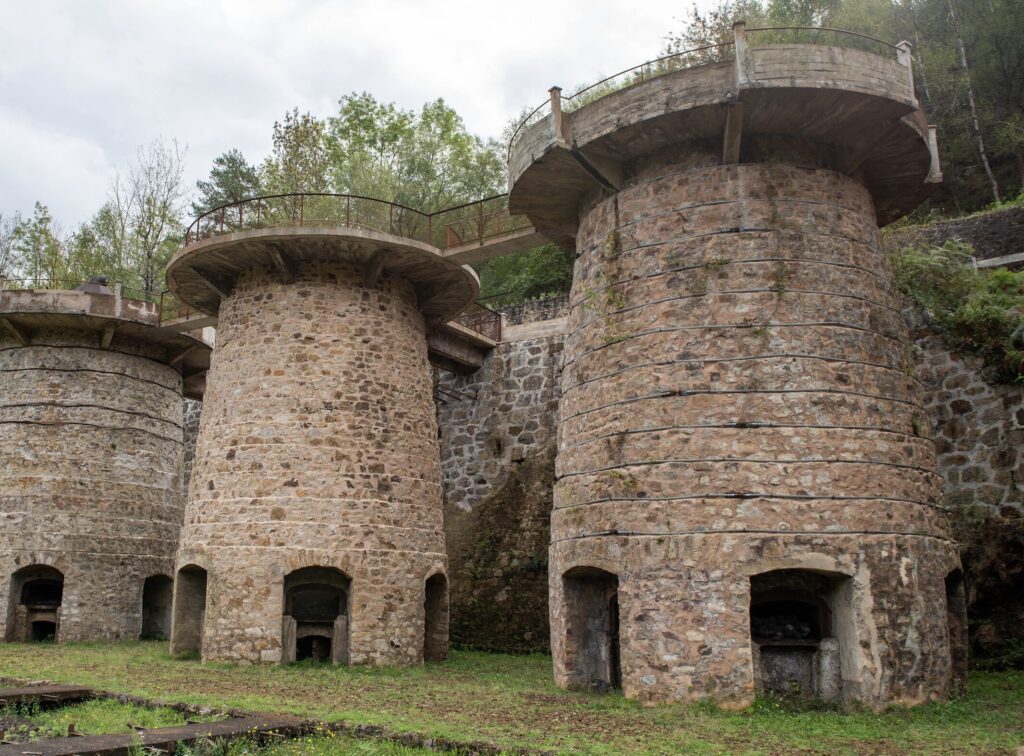
Among the area’s most noteworthy museums there is the José Miguel Barandiaran Museum, in Ataun, dedicated to the patriarch of Basque Culture and to mythology, as well as the Zumalakarregi Museum in Ormaiztegi, which provides information on the life of Carlist general Tomas de Zumalakarregi and on that of his brother. The cultural landscape of Zerain is made up of an ethnographic museum, a water-powered sawmill, a prison, and a shop with handmade items. To understand the current reality of Zerain, it is essential to know about its mining past: since the eleventh century, iron has been extracted in the 150 hectares that are the Aizpea Mines. This mining exploitation has carved a special landscape in the area inside the Aizkorri-Aratz Natural Park, which covers the entire mountain and has been designated as a Cultural Heritage Site by the Basque Government. It is made up of galleries, train tracks, spectacular calcining furnaces, and an array of vestiges typical of the profession: powder magazines for explosive storage, repair workshops, offices, artificial tanks, tool exhibitions, etc. A visit to the Aizpea Mining Complex is a must for anyone who wants to learn about the industrial past of the Basque Country.
Goierri