Gipuzkoa: 1,000 years have passed since the first written reference to the word “Gipuzkoa” appeared
Gipuzkoa: 1,000 years have passed since the first written reference to the word “Gipuzkoa” appeared

1,000 years! In 2025, 1,000 years will have passed since the first written reference to the word “Gipuzkoa.” Proud of a history that preserves the oldest language in Europe and having been the place of stimulus of avant-garde movements, Gipuzkoa is a unique and –above all– authentic territory. In just 2,000 km2 (slightly more than the city of London), there is room for a cosmopolitan capital like San Sebastián, a traditional way of life, a versatile coastline measuring 86 kilometers in length, as well as green and meandering inland regions. Although the number of activities one can do in Gipuzkoa is unlimited (the “So Gipuzkoa San Sebastián” guide includes many of these possible plans), we wanted to highlight nine places and activities that no traveler should miss. As you read our list, please remember that Gipuzkoa is a region with magnificent natural resources, renowned gastronomy, a fascinating industrial heritage, a coast that is famous throughout all the world, peaceful recreational areas, and areas for the more adventurous and families – the options really do not end with the ideas listed here.
Zarautz
From its inception as a fishing village to the disappearance of the whale from the Cantabrian Sea, Zarautz has been a meeting point for local people. And, even today, its virtues as a tourist destination are internationally acclaimed. Surfing, gastronomy, and nature can be experienced here like never before in an environment that reflects the essence of Gipuzkoa’s identity.
Its extensive sandy shores are a paradise for enjoying a day at the beach, as well as for beginning and professional surfers. At the surf schools that dot the town, young people, families, and adults alike come together each year to enjoy for the first time the experience of surfing while in direct contact with nature. Walking along the town’s boardwalk, the local atmosphere becomes more than apparent, with herri kirolak (“Basque sports”) exhibitions on many weekends, concerts, quaint cafés with terraces, and a warm and jatorra (“pleasant,” in Basque) atmosphere on any summer day or weekend of the year.
Hondarribia
Strategically located with France on one side and mountains on the other, Hondarribia’s history and festive atmosphere both remain quite alive. The best-preserved walled city in Gipuzkoa rests atop the cobbled streets here, and the remnants of the strategic town that Hondarribia once was are more than apparent anywhere you look. Its walls have withstood numerous sieges over the centuries. Entering through the Santa María Gate, where a beautiful arch with the city’s coat of arms still proudly remains, we travel up Mayor Street, leaving on either side of us as we advance small local shops, taverns, the town hall, and the Gothic Church of Santa María de la Asunción y del Manzano. As we let ourselves wander, the Plaza de Armas opens up before our eyes (presided over by the magnificent Parador of Hondarribia), an open outdoor area where receptions for the army, bullfights, and other popular celebrations have historically been held.
Leaving the city’s walls behind, we arrive at the Marina District and at the city’s backbone: San Pedro Street. Here, beneath the traditional fishermen’s houses, we find the liveliest atmosphere in Hondarribia. As we walk, we can stop at some of the well-known restaurants and pintxos bars in the area.
Basque Coast Geopark
Amid the coastal municipalities of Mutriku, Deba, and Zumaia, nestled between the Cantabrian Sea and the mountains, lies this must-see site in Gipuzkoa. A UNESCO Global Geopark since 2015, its history has taught us about some of the most important episodes in the Earth’s evolution. Along the 13 kilometers of cliffs that make up the Basque Coast Geopark, we find unique rock formations consisting of layers known as Flysch, a sample of more than 60 million years of the Earth’s history. Whether on foot or by boat, any of the excursions we take will allow us to look more closely at the Flysch, discovering the most intimate details hidden behind their thin layers – strata which, for example, shed light on the impact of a large asteroid or the extinction of the dinosaurs.
It is on Itzurun Beach where the Flysch becomes most relevant. A true treasure for research by geology specialists and a magical place for visitors, anxiously waiting for sunset to enjoy the colors of the sky from an unparalleled location.
Just a stone’s throw away, the green valleys of Deba and Mutriku hide the underground karst world, with countless caves and chasms where visitors can enjoy the roots of one of the oldest peoples in Europe. There, you will find the best collection of cave art horses on the planet, found in the Ekain Cave and declared a World Heritage Site.
Loyola Sanctuary
In the middle of the Urola Valley, amongst mountains and in an idyllic setting, lies this Sanctuary built around the house where Ignatius of Loyola was born in 1491. As we approach its well-kept front gardens, the spirituality of the area washes over us. The presence of the sculpture of Ignatius of Loyola presides over the beginning of the walk that leads us to the entrance of the Basilica bearing his name.
The Loyola Basilica, designed by Italian architect Carlo Maria Fontana, is the central part of the building. From the outside, one can see an impressive 65-meter-high dome, providing balance to the 150-meter-long façade. Work began in 1689 and the building was not inaugurated until July 31, 1738, the Feast of Saint Ignatius. The entire work, which involved up to 600 stonemasons, was carried out using large blocks of marble extracted from nearby Mount Izarraitz.
The Txotx Ritual
Cider season, which lasts from January to the end of April, is a great time to taste the new cider straight from the barrels. During this special season, diners are encouraged to try house ciders alongside the producer – and that is the txotx ritual. This tasting takes place while enjoying a typical cider house menu consisting of a house appetizer, salt cod omelet, fried salt cod with green peppers, char-grilled ribeye steak, walnuts, Idiazabal cheese, and apple or quince paste. Throughout the summer and fall, cider houses celebrate the season by offering cider tasted in the txotx ritual and in bottles, as well as with other seasonal culinary delights.
Sanctuary of Arantzazu
The Sanctuary of Arantzazu, as we know it today, is the result of no less than three reconstructions after the three fires it has experienced throughout its existence, the last of which was in 1834. This impressive construction, perched atop ravines and built on rocks in a rugged and natural area of Oñati, was in constant evolution until 1951, when renovations and expansion projects were put aside to make way for the construction of a new basilica. It was to be a solemn construction, yet expressed in modern terms, with special importance being placed on the artistic component.
From the winning project plans presented by Francisco Javier Sáenz de Oiza and Luis Laorga came the interventions of some of the most international artists from Gipuzkoa. Thus, Jorge Oteiza, despite the obstacles he came up against in the process, was the creator of the apostles on the frieze at the entrance to the Sanctuary; Eduardo Chillida applied his avant-garde style to create the entrance doors; Javier Álvarez de Eulate created the luminous stained glass windows; and Néstor Basterretxea’s pictorial art can be found in the crypt.
Getaria
Cristóbal Balenciaga, the world-renowned haute couture designer, was born in Getaria. Juan Sebastián Elkano, the sailor who completed the first circumnavigation of the world, was also born there. In this small coastal town, now surrounded by extensive txakoli vineyards, part of the history that we know today was forged. Getaria has to have something to make it so special. Who would have guessed that this charming fishing village with cobbled streets has been a cradle of innovation for centuries? At the high part of the town, a building with an impressive façade of black aluminum gives way to the museum that tells of the life of the designer known to the world as Balenciaga. The son of an arrantzale (“fisherman” in Basque) and a dressmaker, he developed his talent over the decades by designing haute couture garments with great flair for the most distinguished characters of the time.
On the other side of the road that cuts through the town, a sculpture of Juan Sebastián Elkano guides us towards the fishing and sailing district. No matter how we choose to get down to the port, which is at the end of the road, the smell of barbecue and the atmosphere of the bars are sure to enhance our senses as we think about those times of whalers, travelers, and tremendous port activity. There, the net menders continue to weave the nets used by the fishermen who brave the Cantabrian Sea, fearlessly facing it – after all, catching the fish that will later fill the grills and dishes of Getaria’s restaurants is at stake. Hundreds of years have passed, but the essence and the way of doing things remain the same.
At the top of the village, a green carpet covers the hills where hectares of vineyards can be found that produce the grapes that give rise to txakoli, a century-old drink that originated in these lands.
Pasaia
Pasaia is one of the great attractions of the Basque coast and of Gipuzkoa. Seafaring tradition merges with gastronomy around a bay with breathtaking views. Walking through the streets of Pasai Donibane or Pasai San Pedro, we can see how the tradition of fishing is still alive in every corner and in the daily lives of the people who live on both sides of the bay.
Albaola, the “Sea Factory” of the Basques, is one of Pasaia’s must-see stops: a shipyard-museum where visitors can witness live the construction of the full-scale replica of the San Juan whaling ship, a sixteenth-century Basque galleon that was shipwrecked in Canada. The guided tour takes us directly to those years of journeys to Newfoundland, of whalers who loaded cider onto their ships, and of when ships were built by hand – just as is done in Albaola.
Aralar Natural Park
In the heart of Gipuzkoa, a great labyrinth of grass and green hills represent the purest essence of Basque culture, its customs, and its age-old language, Euskera. On the way from Tolosa to the Aralar Natural Park, guests can enjoy the essence of the Guipuzcoan inland in its purest state. We must start in Tolosa, the capital of Gipuzkoa in the nineteenth century, where palaces and stately homes accompany us until we arrive at the famous Plaza del Tinglado. There, every Saturday, a lively local produce market takes place, where the home-growers offer their seasonal gems, one of the secrets of Guipuzcoan gastronomy. Because, in addition to its cultural agenda (with its Carnival celebration as its greatest exponent), Tolosa stands out for its magnificent gastronomy: beans, cutlets, chilies, Idiazabal cheese, and pastries captivate the tastebuds of visitors and locals alike.
In the Goierri region (the Basque Highlands), we can find the Ordizia Market, whose origins date back to the eleventh or twelfth century and which brings together sellers of agricultural and livestock products from all over the area each and every Wednesday.
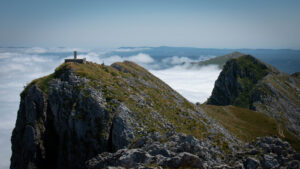
If, amidst all this gastronomic delight, we miss greater contact with nature, the Aralar Natural Park and its summit, Txindoki, are just a short distance away. Walking through the Natural Park, we came across horses and sheep, mountaineers, and hikers. Meanwhile, we are amazed by the light as it hits Txindoki, further enhancing the peak that measures 1,331 meters in height – the most recognizable image of the Guipuzcoan highlands. Behind the mountain we find vast meadows, supported by stone buttresses in all directions. Dozens of trails ascend from the valleys and cross this megalithic and pastoral plateau. From the summit, breathing deeply and with the Basque Highlands on the horizon, time seems to stand still.
Gipuzkoa