Miguel Zugaza: “Foster aimed to achieve an elevated perspective, connecting the museum to the sky and the mountains surrounding us.”
Miguel Zugaza: “Foster aimed to achieve an elevated perspective, connecting the museum to the sky and the mountains surrounding us.”

The Bilbao Fine Arts Museum is experiencing a historic moment. Under the leadership of Miguel Zugaza, the institution is undergoing a profound transformation thanks to Agravitas, the expansion project designed by Norman Foster and Luis María Uriarte. Beyond simply adding exhibition space, this initiative redefines the museum’s relationship with the city and projects it into the future as an international leader. We spoke with Miguel Zugaza about the challenges and aspirations behind this new chapter.
The Agravitas expansion project marks a turning point in the history of the museum. What does it mean for you to lead this transformation?
The Agravitas project by Norman Foster and Luis María Uriarte is the culmination of the Bilbao Museum of Fine Arts’ aspiration to play an increasingly prominent role in a city and region that have strategically promoted culture and art as drivers of social and economic development in recent decades.
Norman Foster and Luis María Uriarte have conceived an architecture that engages in dialogue with the original building while simultaneously imparting a contemporary identity. What values does this proposal convey?
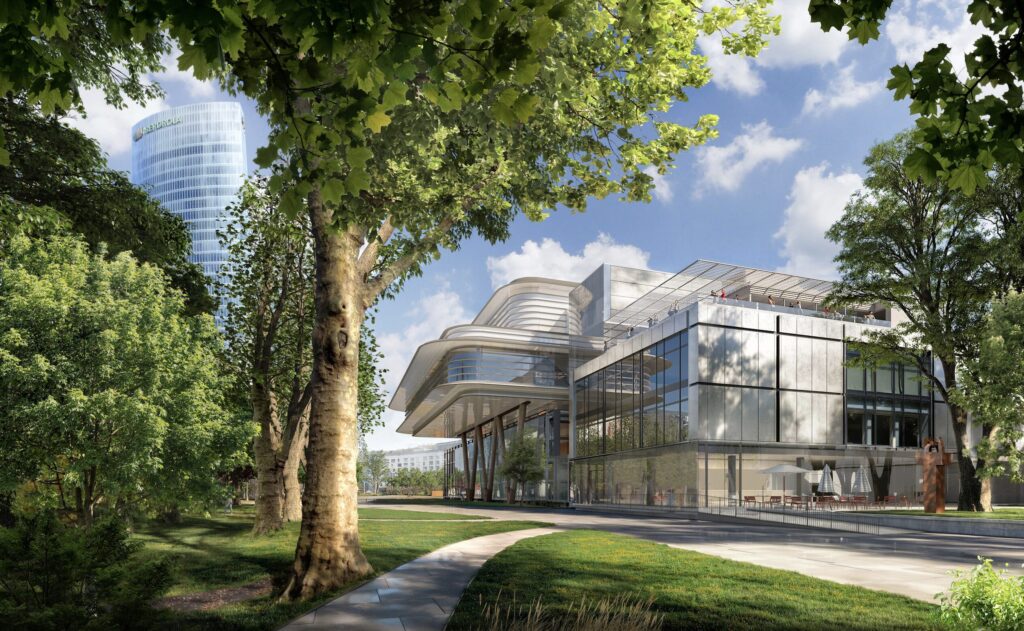
Foster and Uriarte’s design has the virtue of not compromising a single square meter of the museum’s two preexisting architectural designs. Rather, it serves to connect the two buildings while preserving their unique character. Agravitas also introduces a new civic gathering space in the grand welcome atrium, covered by the main architectural body of the expansion.
Beyond its architectural impact, what new exhibition and curatorial opportunities will Agravitas open up for the museum?
Visitors will encounter a museum that unfolds across three buildings, each with its own personality. Each architectural design will offer a distinct experience for the various eras and forms of art kept in the collection, alongside a dynamic program of exhibitions, public activities, and educational initiatives. It will be like stepping into a city’s art district.
Bilbao previously experienced a “Guggenheim Effect” with Frank Gehry. Do you think Agravitas could generate a “Foster Effect” in the city?
Bilbao already saw a “Foster Effect” with the construction of the subway. Thanks to its underground connections, the underground railway has been one of the city’s major transformative elements and has reshaped its surroundings. In that sense, Foster’s current intervention is radically different. In my view, beyond offering the institution greater visibility within the new urban space overlooking the estuary, Foster aimed to achieve an elevated perspective, connecting the museum to the sky and the mountains surrounding us.
The museum boasts a significant artwork collection, featuring highlights by artists such as El Greco, Francisco de Goya, Paul Gauguin, and Francis Bacon. What are the plans regarding new acquisitions or donations to be added as a result of the expansion?
The collection is constantly growing through new acquisitions, loans from other museums, and —fundamentally— donations, which have been one of the defining hallmarks of our museum since its inception — and they continue to be a hallmark. Among the innovations the new museum will offer is the presentation of a previously unseen design and architecture collection, complementing the journey through the museum’s traditional artistic disciplines and forms.
Once the museum’s reconfiguration is complete, which exhibitions will shape the near-term cultural agenda?
The museum’s most important temporary exhibition will feature works from our own collections. This sets us apart from other institutions, which do not possess such a significant and diverse collection as ours. We also plan to develop a program of exhibitions in the new expansion spaces, particularly in the new gallery that opens up to the city through the terrace. This large space, which will be called BBK-museoa, will offer an ambitious program in partnership with the BBK Banking Foundation, Honorary Patron of the museum.
Considering your experience as Director of the Prado Museum in Madrid and the Bilbao Fine Arts Museum, how do you envision the future of museums over the next 20 years?
Since their inception in the eighteenth century, it has not been the museum that has changed, but society. In that sense, institutions must know how to adapt to new demands. In the medium term, one of the great current challenges for museums is undoubtedly understanding the consequences of digital technology and artificial intelligence, in order to explore their opportunities in terms of museographic management plans.
What is luxury to you?
Sharing art with the public, with all types of audiences. That is the great privilege we oversee every day.