Cider houses, wineries, sweets… Goierri surprises all with a culinary proposal that goes far beyond Idiazabal cheese
Cider houses, wineries, sweets… Goierri surprises all with a culinary proposal that goes far beyond Idiazabal cheese
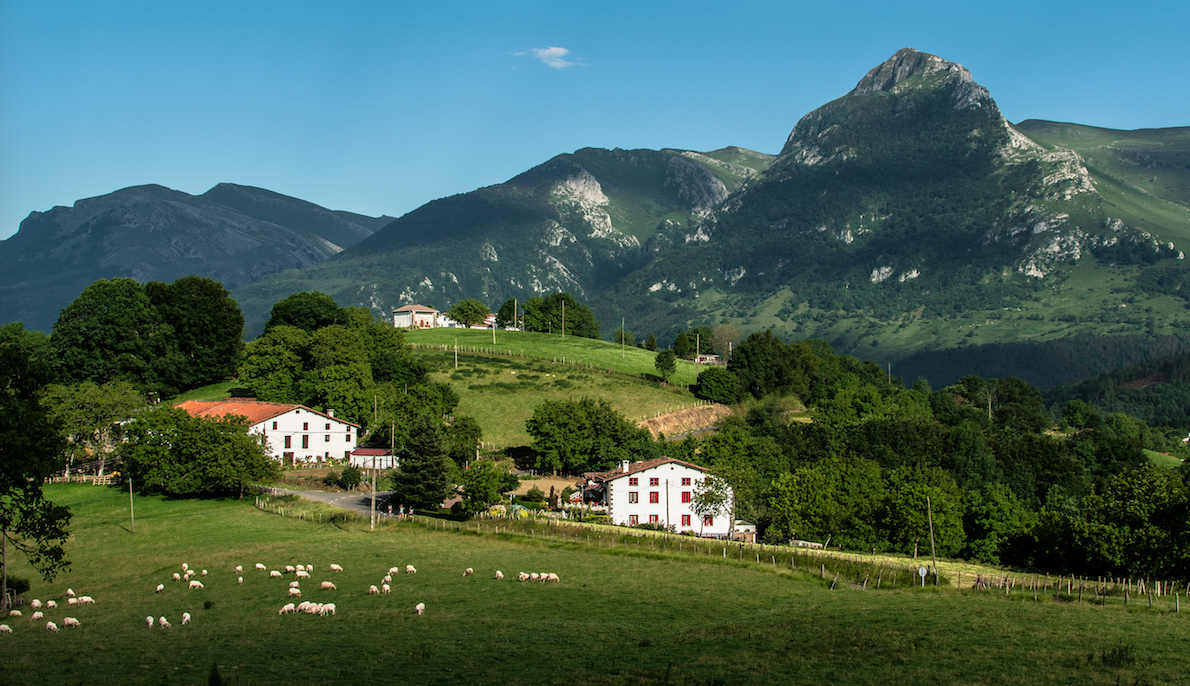
The fact that the Basque love to eat is no secret. The quality of the ingredients and care when preparing traditional recipes are the keys that have brought the Basque Country to be a culinary leader. Especially relevant is the role played by the Goierri region, also known as the ‘Basque Highlands’ and as ‘Idiazabal Territory,’ as it is the birthplace of the famous Idiazabal cheese. However, said sheep cheese is not the only outstanding regional delicacy. The guide which follows will help you get to know the Goierri region’s cuisine in detail, discovering its cider houses, wineries, gourmet products, and museums.
Idiazabal Cheese
The writer Ramón Gómez de la Serna once said that “cheese is the eternity of milk.” This aphorism takes on special meaning in the Basque Highlands, a region in which cheese has been made for 8,000 years. Since 1987, this tradition has also been recognized with its own Designation of Origin, Idiazabal, which takes the same name as the town that is most associated with said product. Identifying the cheeses which have the certified Designation of Origin is simple, as they have a back label with a serial number that is unique to each unit and is coded depending upon the size and format of the cheese being certified. They also have a red band with the text “Idiazabal”, a logotype, and a casein stamp listing the series and unit number on the rind – this is placed there when the cheese is molded or pressed.
Idiazabal cheese is made with raw, unmixed, and unpasteurized milk from Latxa or Carranzana sheep (a variety from the Biscayan region of Enkarterri). The Latxa sheep, originally from the Basque Country, feeds on fresh grass in spring, summer, and autumn. In winter it goes down to the stables, where it eats a mixture of cut grass and animal feed. The animal is farmed to obtain lambs and to extract milk. These sheep also contribute with the rennet from milk-fed lambs – something essential to cheese making.
About seven liters of milk are needed to make a kilo of properly matured cheese. The milk is gently heated in stainless steel tanks to a temperature of 30°C. Then the clean, dry, crushed rennet is added, mixed with salt. The milk coagulates in half an hour, forming an elastic gel that is cut with a cheese cutter into pieces the size of a grain of corn. The grains are slowly stirred, and the temperature of the tank is increased to 37°C. The aim of this is to extract as much whey from the milk as possible and preserve only the fat and protein. When the grains have hardened sufficiently, the heat is turned off and waiting ensues until the grains settle at the bottom of the tank, covered by the whey. When the cheesses are put in their molds, they are marked with a unique number for each cheese. Thus, each peace can subsequently be tracked. Next, the cheese goes through the press and then through the brining system; later, it is refined in a maturing chamber at a temperature that ranges between 8 and 15 °C, with a relative humidity between 80% and 95%. Throughout the process, acidity increases, helping with preservation. This process will take at least two months, with the optimal period being between four and eight months. Depending on the area, there is a widespread practice of smoking cheese. Conservation is in storage rooms with a temperature between 10 and 12 °C.
The result is a cylindrical cheese with an ivory or straw yellow color and a persistent and pronounced aftertaste, a balanced and intense flavor, with hints of spicy, sour, and smoky nuances (the latter, in the case of smoked products).
One of the best experiences offered by the Basque Highlands is the chance to learn to make this food in the dairies that actually manufacture the cheese. Visits are organized at the Idiazabal Cheese Interpretation and Tasting Center, located in Idiazabal. At one of the region’s ten dairies -in Ondarre-, in addition to learning how to make cheese, you can spend the night in its 500-year-old farmhouse.
The most important Idiazabal cheese contest is the one that has been held since 1904 on the first Wednesday of each September in Ordizia. The great Basque chefs never miss the festival, which is also a show of Basque folklore. Between 50 and 60 shepherds participate. The auction of the contest’s winning cheeses is something quite unique: in 2014, for example, €13,050 was paid for 550 grams of cheese.
Blood Sausage
Blood sausage is another of the region’s typical products; the variety produced in Beasain stands out in particular, made with onion, leek, pig’s blood, lard, and spices. Although there are many butchers that make this delicacy, the Olano Butcher Shop, which has kept this tradition alive for 50 years, is the most famous of all.
Mondeju
Mondeju is an artisanal sausage that is made only in Goierri, especially in the municipality of Zaldibia, where competitions for this unique product are held annually. Mondeju is made by stuffing sheep intestine with leeks, peppers, eggs, sheep tallow, chilies, and spices.
Sweets
The gastronomy of the Basque Highlands has always been connected with pastries. The region’s best-known sweets are nut cookies, a cake from Segura known as “Martintxo” in tribute to Saint Martin Loinaz, and a cheesecake made by the Unanue pastry shop which has two locations: one in Beasain and the other in Ordizia.
Ordizia D’elikatuz Center
D’elikatuz is a center that promotes research on food, nutrition, and gastronomy, encouraging campaigns that raise awareness on healthy eating and quality local products. In addition, it serves as a tourist information point for the entire region; this service is especially useful to know when and where the different gastronomic fairs are held – fairs which fill the calendar of the municipalities in the Goierri region.
Idiazabal Cheese Museum
At the Idiazabal Cheese Interpretation and Tasting Center, in addition to providing information on the way this food is made, they organize cheese tasting events for visitors.
Ordizia Market
On March 8, 1512, a fire ravaged the entire town of Ordizia (called Villafranca at that time), leaving only one house and the church standing. Faced with this situation, Joanna I of Castile (better known as Joanna the Mad) granted the town the royal power of being able to hold a tax-free market every Wednesday of the year. Since then, and for more than 500 years, the market has been held non-stop every Wednesday.
This market has fifty stalls where goods from the rural estates of the region are sold, as well as processed products (bio jams, corn cakes, quince, etc.).
Cider Houses
One of the Basque Country’s most deeply-rooted traditions is having lunch at cider houses. The classic menu consists of cod omelet, cod with peppers, grilled steak, and, for dessert, Idiazabal cheese with walnuts and quince. All of this is washed down with homemade cider, served directly from the barrels.
There are seven cider houses in the Goierri region, and most of them remain open throughout the entire year: Aulia, in Legorreta; Otatza and Oiharte in Zerain, Tximista in Ordizia; Uribitarte in Ataun; Etxe Zuri in Olaberria; and Olagi in Altzaga. Two of them -Oiharte and Olagi- are also tourist lodges. These establishments are characterized by their use of local meat, and by making cider with their own apples, thus having obtained the Euskal Sagardoa Designation of Origin.
A Txakoli Winery
Txakoli is a young wine whose production is mainly concentrated along the Basque coast. However, in the Basque Highlands there is a winery with the Getariako Txakolina Designation of Origin: Bengoetxe. With an ecological production process, this winery in Olaberria produces txakoli using the Hondarribi Zuri, Petit Corbu, and Gros Manseng grape varieties. The harvest takes place between the end of September and the beginning of October, when the clusters reach their optimal point of ripeness and balance between sugars and acidity.
Enjoying a glass of txakoli surrounded by the vineyards of this winery brings us back to thinking of the great Gómez de la Serna and that time that he said that “raisins are octogenarian grapes.” Cheers!
Goierri
Tel.: +34 943 161 823